
Property-type and due-diligence guideHow to compare Springbank Hill homes without flattening the differences.
Use the 2021 housing mix to frame the search, then return to the subject property for effective age, site, documents and condition.
Direct answers
Springbank Hill, answered before the long read.
Concise, extractable answers first; evidence, definitions and property-level limitations follow below.
01What housing form should a Springbank Hill comparison start with?
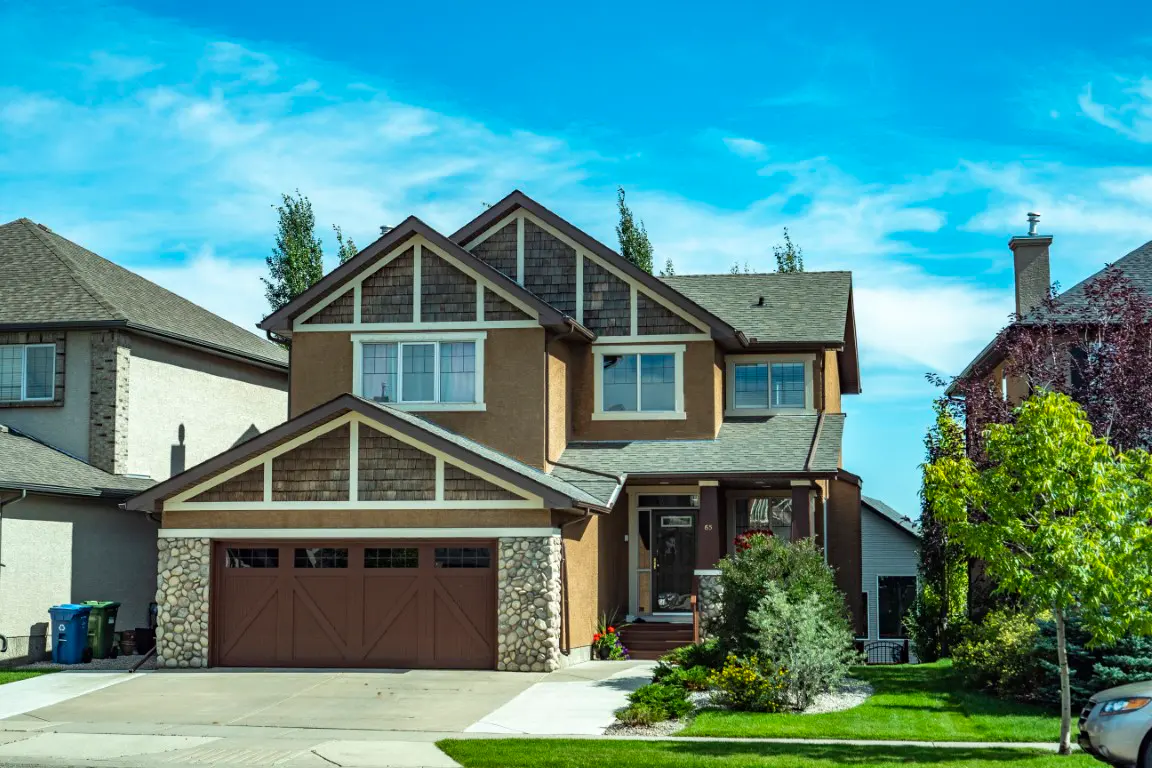
2,560 occupied private dwellings were reported as single-detached houses in the 2021 Census profile (78%); 345 apartments in buildings with fewer than five storeys represented another 11%.
02Why does construction period matter in Springbank Hill?
Springbank Hill’s largest reported construction cohort was 2001 to 2010 with 2,100 occupied private dwellings (64%), followed by 1991 to 2000 with 515 (16%). The date helps shape inspection questions but does not establish effective age after renovation or replacement work.
03What ownership documents may matter in Springbank Hill?
2,750 private households were reported as owner households (84%) and 530 as renter households (16%) in 2021.
04What is the most important property-level check?
Identify address-specific water, drainage, slope, noise, traffic, construction, fire, environmental or insurance questions relevant to the Springbank Hill property; do not generalize an exposure to every home.
Official referencesCity of Calgary and government records used for local context2 references +
Official records provide dated community context. Current listing status and conclusions about one property still require the applicable live record and property documents.
Housing profile
The Springbank Hill housing baseline
012,560 occupied private dwellings were reported as single-detached houses in the 2021 Census profile (78%); 345 apartments in buildings with fewer than five storeys represented another 11%.
02Springbank Hill’s largest reported construction cohort was 2001 to 2010 with 2,100 occupied private dwellings (64%), followed by 1991 to 2000 with 515 (16%).
032,750 private households were reported as owner households (84%) and 530 as renter households (16%) in 2021.
Source: The City of Calgary, 2021 Census Community Profile: Springbank Hill. Values are Census observations and may not total exactly because of rounding or source disclosure controls.
Buyer inspection lensTurn the profile into property questions.
Question 1Address-specific local context
Identify address-specific water, drainage, slope, noise, traffic, construction, fire, environmental or insurance questions relevant to the Springbank Hill property; do not generalize an exposure to every home.
Question 2Permits and land use
Confirm the current municipal land-use designation, permit history, approved plans and any nearby application for the exact Springbank Hill address.
Question 3Title and insurance
Review the current title and applicable registered instruments, easements, caveats, liens, encumbrances and plans with qualified legal advice.
Question 4Inspection scope
Set inspection scope from the property's actual age, construction type, systems, renovations, site and known disclosures; a community profile is not a property inspection.
Comparison worksheetClassify, locate and document.
Step 1Classify
Place the property within distinctive detached and estate properties, custom and comprehensively renovated homes, and different site, outlook and privacy contexts before selecting the first comparable.
Step 2Locate
Read the site in relation to a location evaluated at the address level, access considered alongside privacy and setting, and luxury alternatives across the Calgary region, then verify the actual distance, access or status.
Step 3Document
Resolve construction and renovation documentation, site, title and land-use context, and Replacement-cost and effective-age assumptions with the current title, municipal record, corporation document or appropriate specialist.
Comparison discipline
Community context narrows the questions. It does not answer them for the house.
2,560 occupied private dwellings were reported as single-detached houses in the 2021 Census profile (78%); 345 apartments in buildings with fewer than five storeys represented another 11%.
Springbank Hill’s largest reported construction cohort was 2001 to 2010 with 2,100 occupied private dwellings (64%), followed by 1991 to 2000 with 515 (16%).
Start with current homesCurrent Springbank Hill homesCompare current Springbank Hill choices
Browse the dedicated HomesForSaleNearMe community search, then bring a specific address back to Dusko and the team for status confirmation and a property-level review.
Complete housing evidence packFive layers behind the Springbank Hill comparison.
Layer 1Dwelling forms
- Single-detached house: 2,560 occupied private dwellings (78%) in the 2021 Census profile.
- Apartments in buildings with fewer than five storeys: 345 occupied private dwellings (11%) in the 2021 Census profile.
- Semi-detached house: 170 occupied private dwellings (5%) in the 2021 Census profile.
- Apartments in buildings with more than five storeys: 140 occupied private dwellings (4%) in the 2021 Census profile.
- Row house: 55 occupied private dwellings (2%) in the 2021 Census profile.
Layer 2Construction periods
- 2001 to 2010: 2,100 occupied private dwellings (64%); use this as historical community context, not the age of a listing.
- 1991 to 2000: 515 occupied private dwellings (16%); use this as historical community context, not the age of a listing.
- 2011 to 2015: 465 occupied private dwellings (14%); use this as historical community context, not the age of a listing.
- 1981 to 1990: 60 occupied private dwellings (2%); use this as historical community context, not the age of a listing.
- 2016 to 2021: 80 occupied private dwellings (2%); use this as historical community context, not the age of a listing.
- 1961 to 1980: 40 occupied private dwellings (1%); use this as historical community context, not the age of a listing.
Layer 3Lot and site questions
- Compare the exact Springbank Hill parcel for dimensions, orientation, grade, access, easements and neighbouring context; the community profile does not describe those property-level attributes.
- Review the survey or real property report, current land-use record and title before making a redevelopment, parking, access or boundary assumption.
Layer 4Renovation and redevelopment
- Match the inspection and document plan to the subject property's actual construction, additions and effective age rather than the community's largest Census-era cohort.
- Ask for permits, plans, warranties, invoices and material-renovation records where applicable, then distinguish documented work from cosmetic presentation.
Layer 5Condominium or association context
- For any condominium or managed-property form, review the corporation or association documents, insurance, financials, reserve planning, rules, parking, storage and unit obligations.
Continue with purpose
The next useful layer of the Springbank Hill decision.
Each route has a separate job. Follow the evidence from community context to the specific property instead of repeating the same article under another keyword.